


by Keldon Lou, DPT, SCS – Sports Injury Rehab Program Lead
How strong are you? How well do you move? Is one side of your body stronger than the other?
These questions can be hard to answer just by watching someone move.
At Rose City Physical Therapy in Portland, Oregon, VALD testing helps you measure where you are today and track your progress. We use tools including ForceFrame and ForceDecks to measure strength and physical performance, whether you are recovering from an injury, preparing to return to sports, or working to improve your strength.
VALD Testing for Work Injuries
VALD testing is not just for athletes. If your job involves lifting, repeated movements, or other physical tasks, we can use testing to measure strength and track recovery after a work-related injury. Results may help your physical therapist and workers’ compensation case manager understand your progress. Along with other clinical findings and job-specific testing, they can help guide return-to-work planning.
Want to learn more? Contact Rose City Physical Therapy or call 503-228-1306 to speak to one of our sports physical therapists about VALD testing.
What Is VALD Testing?
VALD makes tools that measure strength, force, balance, and physical performance. At Rose City Physical Therapy, we use two of these tools:
- ForceFrame measures how much force your muscles produce in a set position.
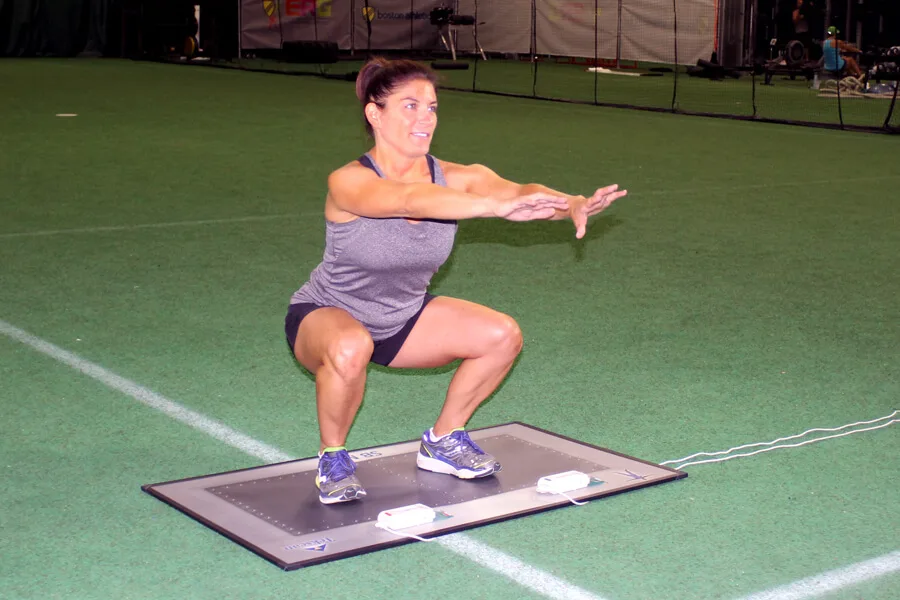
- ForceDecks uses force plates to measure how you push against the ground during activities such as jumping, landing, and balancing.
Instead of relying only on how strong you feel or what your therapist can see, VALD gives us numbers we can track over time.
How Do Your Numbers Compare?
When suitable reference data are available, we can compare your results with those of people of a similar age, sex, or athletic background. These comparisons can help set goals, but they do not tell the whole story. Your therapist also considers your health, injury, sport, and personal needs.
You Don’t Have to Be Injured to Benefit From Testing
You do not have to wait until something hurts to learn more about your body. Testing can help you:
- Measure current strength and performance
- Find differences between the right and left sides
- Track progress during a training program
- Identify areas that may need more attention
- Measure improvement after an injury
- Help guide return to sports decision making
Think of testing as a snapshot of your physical performance. A preseason test may reveal areas to work on through targeted exercise. A well-designed strength and conditioning program may lower the risk of certain injuries, but testing alone cannot prevent injuries.
ForceFrame: Measuring Your Strength
ForceFrame measures isometric strength. That means pushing or pulling against something that does not move while your joint stays in one position. We can test the hip, knee, ankle, shoulder or elbow, depending on your goals.
How Can ForceFrame Help Athletes?
A swimmer may benefit from testing shoulder rotation strength. A runner may benefit from hip and leg testing. An athlete recovering from knee surgery may need strength testing on both legs as part of a larger return-to-sport evaluation.
Learn more about our ACL rehabilitation in Portland.
ForceDecks: Measuring Force During Movement
Strength is only one part of sports, daily activity, and work performance. You also need to produce and absorb force, sometimes very quickly. ForceDecks measures forces between your body and the ground during jumps, landings, balance tests, and other movements.
- Jump height and performance
- Force production and power
- Forces during landing
- Balance and stability
- Differences between legs
- How quickly you produce force
Why Does This Matter?
Two athletes may jump the same height but push off or land differently. ForceDecks can show these differences in force. It does not measure full-body movement mechanics by itself; your therapist may also use observation or video. Differences between sides do not always mean something is wrong, and a single score cannot predict whether you will get injured.
ForceDecks can also measure balance and how quickly you produce force. These abilities matter in sports and daily life, including activities that require quick reactions to avoid a fall.
What Does VALD Testing Mean for You?
Am I getting stronger? We can measure your strength, create a plan, and retest later.
Is my injured side catching up? We can compare both sides and track changes during recovery.
Am I ready to do more? Test results add useful information alongside pain, movement, confidence, and sport-specific demands.
I am healthy, but want to perform better. Testing can establish a baseline and show areas where strength, power, or balance may improve.
Am I ready to return to work? Testing may help show your progress and guide training for demanding job tasks.
Ready to see how testing may fit your recovery? Explore our sports injury rehabilitation services or call 503-228-1306.
A Better Way to Track Progress
You may feel stronger, but how much stronger? You may jump better, but how much has your performance changed? Repeating tests can help answer these questions. Your therapist can use the results along with your symptoms, movement, goals, and training demands to guide care.
Research shows ForceDecks can provide valid and reliable results for many measurements when tests are done in a consistent way. Accuracy depends on the test and the measurement being used.
Research: ForceDecks validation and reliability study.
VALD Testing at Rose City Physical Therapy in Portland, Oregon
We work with patients who enjoy many sports and activities. A swimmer has different needs than a runner. A climber has different needs than a soccer player. Someone recovering from ACL surgery needs a different testing plan than a healthy athlete seeking a baseline. We select tests to fit the person.
Who Can Benefit From VALD Testing?
Swimmers: Shoulder and hip strength testing can guide training and recovery.
Runners and skiers: Leg and hip strength and selected movement tests can help track rehabilitation.
Field and court athletes: Strength, jumping, landing, and power tests can support performance and return-to-sport planning.
Athletes recovering from ACL surgery: Repeated testing can track strength and power throughout rehabilitation.
Workers with physical jobs: Testing can help measure recovery and support return-to-work planning.
Active adults: Testing can help measure strength, balance, and abilities that matter in daily life.
Explore our running injury physical therapy program.
For more on returning after injury, read Back in the Game: Guidelines for Safe Return to Sports.
You Don’t Need to Wait for an Injury
Your body changes as you train and stay active. Testing gives you a snapshot of where you are today and a way to measure improvement. You may find your two sides are more alike than expected, or you may find an area to strengthen. Neither result is automatically good or bad. It is information that helps you and your therapist make better choices.
Testing alone cannot prevent an injury. Paired with a well-designed activity specific exercise plan, it can help guide training and support efforts to lower injury risk.
Interested in Seeing Your Numbers?
Whether you are a competitive athlete, weekend warrior, active adult, or someone recovering from an injury, the next question is whether VALD testing fits your goals. It can help you understand your strength and performance.
You do not need to be injured to benefit.
Know your numbers. Understand your body. Train with purpose.
Schedule an Evaluation in Portland
Before you schedule, feel free to call and ask whether VALD testing fits your goals, which tests may be appropriate, and whether testing is part of a physical therapy evaluation or available separately. You can also ask about appointment length, what to wear, and cost or insurance coverage.
Call Rose City Physical Therapy at 503-228-1306 or request an appointment. Ask our sports physical therapists whether VALD testing fits your recovery, return-to-sport plan, or fitness goals.